Removing yourself from the registry
How to remove your name from the organ donor registry
Removing your name from the organ donor registry, or from the organ donor list, takes minutes and does one thing: it withdraws your yes. There is no longer a recorded consent to donate. It does not record a no. Other people can still authorize a donation for you, and the registry you came off is not a document anyone at a bedside goes looking for.
Removing yourself
Comes off the registry, so there is no longer a recorded yes.
Yes withdrawn
A signed refusal
Records a clear no, and bars other people from authorizing a gift for you.
No recorded
The difference that matters
Removal and refusal are different acts
One takes a record away. The other puts your decision in writing so that it can be found. Do only the first, and nothing says no.
Removing yourself
Comes off the registry, so there is no recorded yes, and it does not create a documented no. Your driver's license is a separate record that this does not touch.
A signed refusal
Records your decision in writing, in the form your state recognizes, so that it can be found when it is needed.
The side-by-side comparison
What each act does, and does not do
Scroll sideways to see both columns.
| Aspect | Removing yourself (Revocation) | A signed refusal |
|---|---|---|
| What it changesThe core difference in plain terms. | Takes you off the donor registry. No consent is recorded, and no refusal is either. Section 8(b): A donor's revocation is not a refusal and does not bar others from making a gift of the body or parts. | Records a no you can point to, whether or not you were ever on the registry. Sections 7(a) & 7(d): An individual's unrevoked refusal bars all other persons from making an anatomical gift. |
| Who can still authorize a donation?Even after you take action. | Family, or whoever your state's law lists, can still authorize a donation. | A refusal executed the way your state requires bars those people from making a gift for you. |
| The mark on your driver's licenseA separate record with its own steps. | Its own record, and leaving the registry does not clear it. The card and the registry are two lists. | Not on the license at all. A refusal is a document you sign. |
| What it takesEffort, and where it has to happen. | Wherever your state's registry runs it, and each state runs its own process. | A signature, witnessed the way your state requires, and a copy someone can find. |
-
What it changesThe core difference in plain terms.
Removing yourself (Revocation)
Takes you off the donor registry. No consent is recorded, and no refusal is either.
Section 8(b): A donor's revocation is not a refusal and does not bar others from making a gift of the body or parts.
A signed refusal
Records a no you can point to, whether or not you were ever on the registry.
Sections 7(a) & 7(d): An individual's unrevoked refusal bars all other persons from making an anatomical gift.
-
Who can still authorize a donation?Even after you take action.
Removing yourself (Revocation)
Family, or whoever your state's law lists, can still authorize a donation.
A signed refusal
A refusal executed the way your state requires bars those people from making a gift for you.
-
The mark on your driver's licenseA separate record with its own steps.
Removing yourself (Revocation)
Its own record, and leaving the registry does not clear it. The card and the registry are two lists.
A signed refusal
Not on the license at all. A refusal is a document you sign.
-
What it takesEffort, and where it has to happen.
Removing yourself (Revocation)
Wherever your state's registry runs it, and each state runs its own process.
A signed refusal
A signature, witnessed the way your state requires, and a copy someone can find.
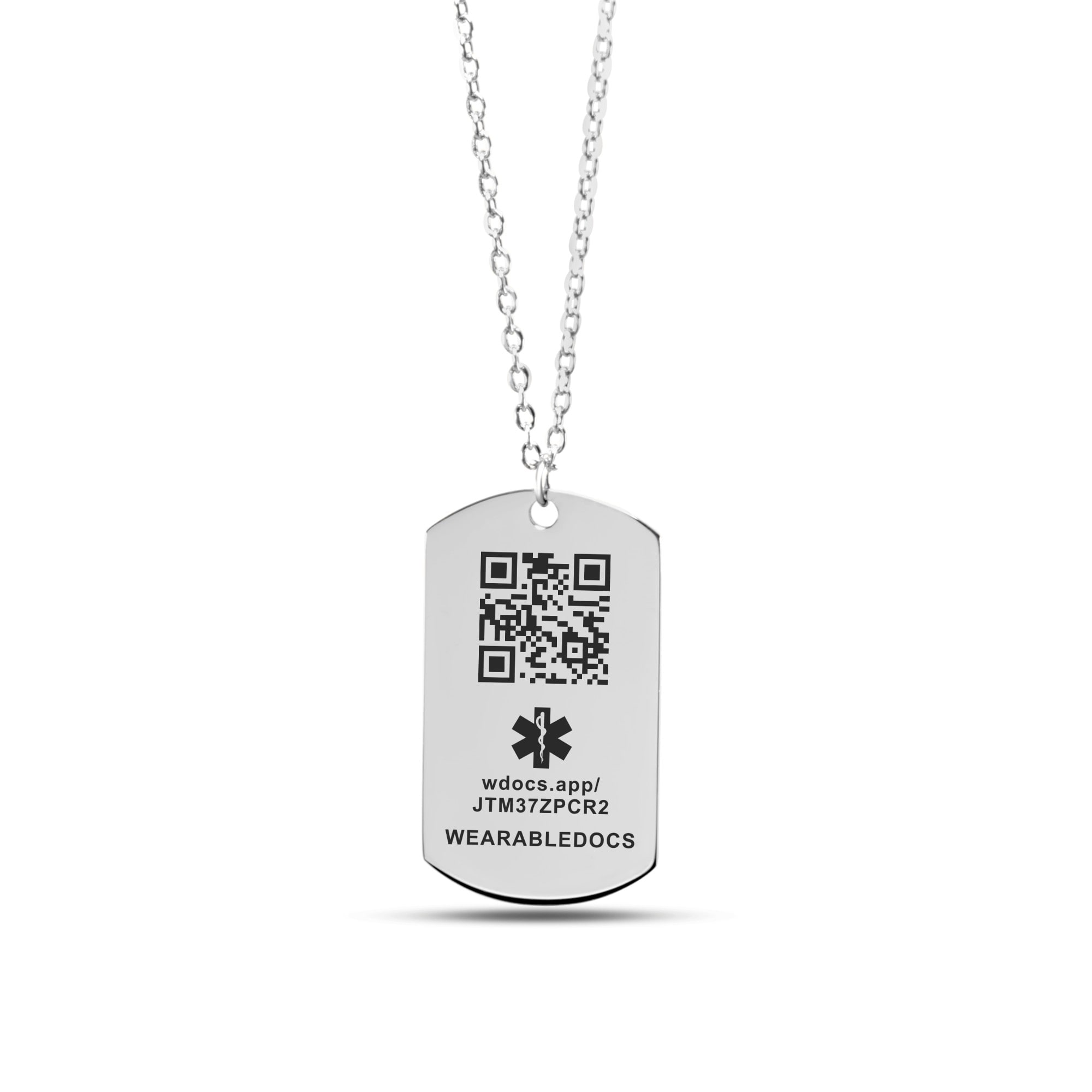
Many people assume that taking their name off the organ donor registry means they are protected. Under the law, it simply leaves a blank space. WearableDocs bridges this gap by hosting your signed, legally binding refusal on WearableDocs, making it instantly accessible via a QR code carried on your person.
The Legal Loophole Most People Miss
A blank registry is not a protective wall.
Under the updated Uniform Anatomical Gift Act (UAGA), the law expects you to state your refusal explicitly. If you simply remove your name from the DMV registry, you have only cleared your consent. You haven't actually barred the hospital from moving forward.
Here is the real danger: If a patient has no documented refusal on file and their family cannot be reached in time, the law allows hospital administrators to step in and authorize organ procurement themselves. WearableDocs closes this exact loophole.
In Plain Terms
- Opting Out = Erasing a previous "yes." Your record is now blank.
- A Refusal = A signed, binding document that legally says "no."
- WearableDocs = Your signed "no," hosted securely on WearableDocs and accessible via a personal QR code.
Three Steps to Total Protection
Clear the list, then lock the door.
Step 01
Remove Your Name from All Registries
Take your name off your state’s DMV list and any other local or national registries where you may have previously signed up.
Step 02
Get Written Confirmation
Don't just assume the system updated correctly. Request written or digital confirmation that you are no longer listed as a donor.
Step 03
Document a Signed Refusal You Can Prove
Because the UAGA requires an explicit, documented refusal, you need a record that can be found immediately at your bedside. Without it, hospital staff or administrators can make the final choice if your family isn’t present.
Side by Side
Opting Out vs. A Signed Refusal
Scroll sideways to see both columns.
| What you need when you cannot speak | Standard Registry Opt-Out | WearableDocs |
|---|---|---|
| Removes a prior “yes” | Yes | Yes |
| Creates a legally documented “no” | No | Yes |
| Accessible at the bedside in seconds | No | Yes |
| Displays your actual signature | No | Yes |
| Alerts your emergency contacts | No | Yes |
| Leaves a digital audit trail of who viewed it | No | Yes |
- Removes a prior “yes”
Standard Registry Opt-Out: Yes
- Creates a legally documented “no”
Standard Registry Opt-Out: No
- Accessible at the bedside in seconds
Standard Registry Opt-Out: No
- Displays your actual signature
Standard Registry Opt-Out: No
- Alerts your emergency contacts
Standard Registry Opt-Out: No
- Leaves a digital audit trail of who viewed it
Standard Registry Opt-Out: No
Related
Where to go next
Remove organ donor from your license
The designation on the card is its own record, and it does not come off when you leave the registry.
Refusal vs. removing yourself
The two acts side by side, with the act's own words in the cells.
State laws can vary
What a refusal has to look like, and how a registry comes off, are both set by your state.
State-specific
Your state's registry and your state's refusal are two rules
How you come off the registry, and what a refusal has to look like to bind, are both set by your state. Check what applies where you live.
The bottom line
Coming off the list is one act. Refusing is the other.
We draft your refusal from your choices, you sign it, and your QR code leads anyone straight to it. Removal and refusal are separate acts, and you can do both.